
Sustainability Practices

Practices and Policies
We're in the early stages of building our full sustainability policy, and students will lead the way, working alongside faculty and outside experts. Together, these teams will investigate:
The design of our future long-term campus in Hakuba
Supply chain and food sourcing
Transportation
Waste disposal and recycling
Energy generation and use
Water
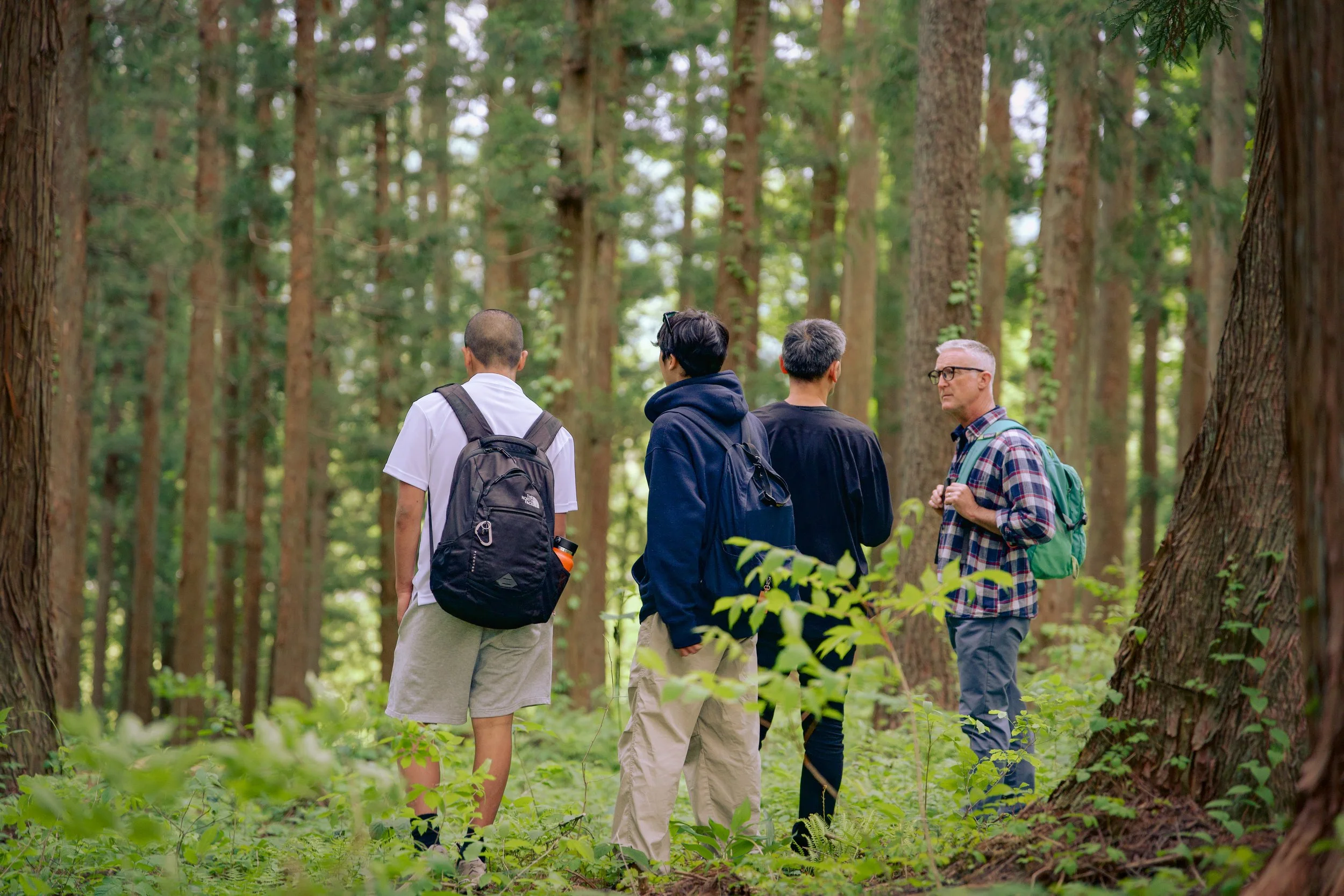
Sustainability is also at the heart of many of our interdisciplinary projects. One example: an in-depth study of the ecology and water systems within the school's own nine acres of forest. Students will explore the history of the land, the plants, animals, and fungi that live there, how water moves through it, and the systems that connect it all.
How can we be good stewards of this land? How might it support human flourishing while protecting, or even improving, the health of the ecosystem? Questions like these, grounded in real experience, will guide our path toward sustainability.

Staying Connected With Nature
Caring for the environment is one of the pillars of our school, guided by a single driving question: what kind of education allows both people and planet to thrive?
Our mission is to raise young people who feel deeply connected to the natural world, understand the science and systems behind it, and have the skills and confidence to lead in protecting it.
We're fortunate to do this work in the Hakuba Valley, a place of extraordinary natural beauty. Here, our role is simple: give students room to experience nature directly and personally, and then step out of the way.